Showing posts with label dog training in burlington ontario. Show all posts

Thursday, November 29, 2012

New Classes, New Location!! Dog trainer in Milton and Burlington


I couldn't wait to announce the new classes starting up! We're at a brand new location in a great spot between Milton and Burlington. First line, just before Lower Base Line. Great indoor location for the winter. Lots of new classes starting, and now is always a great time to start training your dog.

We will be offering our Smart Dogs Basic Class, along side Smart Puppy  for those younger than 20 weeks, Fun Agility, Smart Dogs Refresher, Smart Dogs Advanced, Bootcamp in the Spring, Doggy Style Fitness, Seminars and more!

Keep an eye on the site for start times, dates and address and feel free to contact us with any questions or if you are interested in signing up dogtraining101@hotmail.com. Remember, a trained dog is a happy dog and has a happy owner.

Friday, September 7, 2012

How Not To Greet A Dog - Dog training in Milton, ON

I have found, for the most part, a good number of children will ask before petting a dog. I credit the parents for this and give them a gold star. Not all dogs are friendly, and not all dogs want to be mauled and handled by strangers and every parent should warn their child of this. Even the most friendly of dogs will not feel comfortable when over whelmed by a "friendly" child, so it is best to ask for permission before introduction.

Once past the permission step is where I see a lot people fail in their attempt at making friends with a dog, and I'm not just talking about children. For what ever reason, adults and children alike, feel the need to get "into the face" of a dog, especially smaller dogs because of the cute factor. This is absolutely the most dangerous position you can put yourself in when greeting a strange dog. The face houses the mouth, and a dogs mouth holds, well, a mouth full of teeth, if the dog is uncomfortable, those teeth can be used to let someone know how the dog is feeling.

Face to face greetings are rude, not only in the dog world, but in the human world as well. Think about how uncomfortable you feel when someone invades your personal space. Then imagine someone you don't know, running up to you, sticking their nose right against yours without your permission, out in public, telling you how adorable you are and not to worry, they are good with people. My guess is that your first reaction would be a bit of a startle reflex and then possibly some hostility. Remember, this is a stranger whom you've never met that's invading your personal space. At the least, you'll feel uncomfortable, at the most, you'll lash out. And this is exactly how dogs feel when their space is invaded, but their lash out won't be a fist, rather a bite.

Hugs and kisses are also dangeous things when it comes to strange dogs, as is overwhleming rough housing, over stimulating petting, chasing and picking up. All of these things can cause the dog to become anxious, which can trigger a bite.

The best way to approach a dog is to first ask the owner for permission, I don't care if you are an adult or a child, ask if the dog is friendly, and then relax, don't invade space, let them come to you if they want to greet. A sniff of the hand, a small strach on the chest, and if they are little, get down on their level so as not to be intimidating or overwhelming. Don't force it, and never chase a dog who doesn't want to be petted. Keep an eye out for a dog stiffening up, or otherwise showing body language that means they are anxious. Keep the greeting short, calm and non-threatening, then move along.

So think before you pet, and don't invade personal space if the dog is uncomfortable, even if the owner says they are friendly. And NEVER EVER put your face into the face of a strange dog.

Monday, July 16, 2012

Motivators and Training - Dog Trainer in Burlington and Milton


There are a number of different motivators that we can use when training our dogs. Motivators are the driving force that makes the dog want to work for us. In sport dog training, a dog with high drive for food, play or prey, makes treats, toys and tugs excellent motivators for performance. These motivators tend to keep these dogs "in drive" meaning that you are going to get a quick, intense, upbeat, flashy performance utilizing these tools. Corrections, voice, touch, play and social interaction are also motivators, but on a bit of a different level. Pairing different motivators together is what gives us reliable results both in the performance arena, at home, or where ever you and your dog may be.

Sometimes though, the motivator is too much for the dog to handle, and you're left with a sloppy, excited mess at the end of the leash. And it is not just the use of food that entices this intense behaviour. There are many dogs who are extremely motivated by touch and social interaction, that fall apart completely when their owners give them a rousing "good boy!!! oh such a good boy!!!". Timing and self control also become an issue when the motivator is so highly coveted that the dog becomes giddy thinking about it.

The key to utilizing the motivator is feel out the intensity used by the owner to deliver that reward, be it treats, praise, tugs etc. It is also our job as trainers to determine what works best for each individual dog. If you have a dog that is nuts for balls, but will work for a treat reward or praise, use the treat or voice instead of the ball to tone down the energy level until the dog has built up enough self control to work for the toy that drives them to the edge.

Self control is a whole topic unto it's own, but it is something that is extremely important for dogs to learn, and until your dog learns self control, don't use over-the-top rewards or techniques that cause the dog to "loose their mind". If you get to that point with your dog, he or she is no longer learning because they are so ensconced with the reward that nothing else really matters.

There is also another side to the motivators that causes dogs to lack drive, lack interest and lack the joy of wanting to work for their owners. Usually this comes with the sole use of punishment based training, the incorrect use of voice/petting for reward when training (too much or too little) or the incorrect steps to wean the dog off of the food/toy lure. All of these can reduce the performance in your dog and create unreliable, lackluster results.

Do we really need motivators that put the dog in "drive" for pet dog training? The average dog owner doesn't need a flashy, high energy performance when asking their dog for a down stay on the front lawn. They don't need the dog "in drive" to perform basic obedience commands at home. They don't need to have a dog that displays controlled insanity when asked to sit. They don't want to have to try and control the energy level that comes with certain motivators. Most owners just want reliability, without the intense energy level that can be brought on by certain motivators. This is where we need to take another look at the motivator currently being used and adjust strategies accordingly if your dogs drive for the reward it too high.


Pairing motivators such as treats, voice and corrections together, once the dog understands what is beinig asked, tends to offer a very reliable result, with just enough drive to get quick response, but not enough drive to bring the dog over the edge. Pairing motivators in this way allows trainers to fade the food reward and replace it with voice/praise/petting, so food no loner is relied upon for commands.  As well, pairing guiding corrections can help tone down any incorrect or high intensity responses, let the dog know that he or she needs to comply and give the dog a clearer picture of what is being asked, creating a calmer thought process for the dog.  (There are steps to be taken when utilizing the corrections for obedience training, and the dog needs to understand what we are asking of them before corrections are added in order to be fair to the dog during the learning process.)

Experient with your dog - find out what works by testing different motivators in non-distracting settings to see how your dog responds. If you want to advance your dogs training, are interested in sport training or just want a reliable response from your pet, feel free to contact Smart Dogs Canine Training to help guide you along the way dogtraining101@hotmail.com.


Tuesday, May 22, 2012

I Said STAY! - Milton Ontario Dog Training


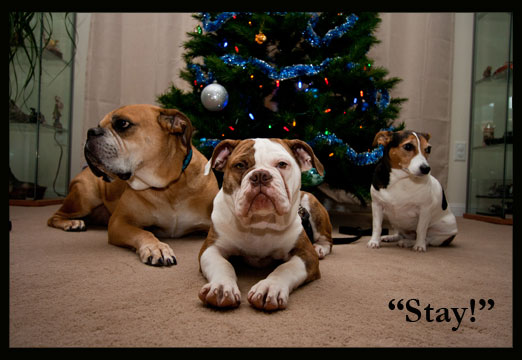
Stay is one of the most important commands a dog can learn, and also one of the hardest for many owners to perfect with their dogs.

Here's a few tips that we've found useful over the years to obtain a better, more reliable stay:

  • Make sure your dog knows what's required, that means practice makes perfect - start in low distraction areas and from there start to build up on duration and distance
  • Once your dog is getting good in low distration, proof your stay in all sorts of locations, different durations and distances (a long line helps with this)
  • Don't try and hold your dog in place with your eyes - that direct stare is very inviting
  • Don't call your dog out of a stay too many times - return more times then recalling from a stay and you won't get that anticipation
  • If you're dog isn't looking at you, who cares, as long as he's holding his position - don't use his name to get his attention back on you, he's most likely going to think you want him to come back to you
  • Once your dog knows what is being asked of him, make sure there is a consequence for breaking the position - a correction and a replacement back to where he was usually suffices
  • Make sure you're using a release command such as "ok" so your dog knows when to move - no release means he can move whenever he feels like it
  • Don't reward half way through the stay and expect your dog to keep holding it - "what's the point", they think, "I already got the reward" - reward after the release

A stay can mean the difference between life or death in certain situations, so having a rock solid stay is extremely important. If you need help training your dog, please feel free to contact us to set up an appointment at dogtraining101@hotmail.com and visit the website to see the classes and private training that we offer www.smartdogsk9.com.

Saturday, May 19, 2012

New training style impacts obedience | Home | Toronto Sun

Interesting article from a professional trainer with over 20 years of experience dealing with every kind of issue dogs can throw at you.

New training style impacts obedience | Home | Toronto Sun

This is not rocket science, but just common sense. Reward and corrections play a critical role in training your dog to be a well behaved member of your family.

Friday, May 18, 2012

Brandy Takes a Break - Dog training in Milton

Brandy takes a break on one of our walks to do her favorite thing in the entire world - spend time with a ball.

New Dog Obedience Classes Starting Soon in Milton & Burlington


Does your dog need training? Are you frustrated with your dogs lack of control?

We're here to help!

Smart Dogs Canine Training is expanding to Burlington. We will be offering our group classes out of our new location at Canine Cabana Pet Services Ltd. on Advance Road.


Smart Puppy Classes

Wednesday Evenings 7:15-8:00pm Milton (Indoor)

Friday Evenings 7:15-8:00pm Burlington (Indoor)
Sunday Afternoons 1:00-2:00pm Burlington (Indoor)


Smart Dog Basic Classes

Saturday Afternoons 11:30-12:30pm Milton (Outdoor)

Sunday Mornings 10:00-11:00am & 11:30am-12:30pm Burlington (Indoor)


Smart Dogs Bootcamp

Saturday Mornings 10:00-11:00am Milton (Outdoor)
Saturday Afternoons 2:30-3:30pm Burlington (Outdoor)

We also offer private, in home training and problem solving. We take the approach that no two dogs are alike and tailor our private sessions to your needs.

Our balanced approach to training gives your dog the whole picture, not just half. We are not a click and treat school. We rely on reward to teach, but our goal is to have your dog listen to you and respect you without the constant use of cookies.

Visit our website to sign up for class or inquire about private lessons www.smartdogsk9.com and don't forget to like us on facebook www.facebook.com/smartdogsk9

Sunday, May 6, 2012

Doggy Bootcamp - Get Your Dog Under Control - Dog Training in Milton


Doggy Bootcamp Training

TRAINING IN REAL WORLD ENVIRONMENTS!!

Run your dog through all the paces, learn to maintain control, leadership and obedience in real life situations. We will be emphasizing control on leash, in stays and distance recalls. Dress appropriately for the weather and be prepared to be active because we'll put you through your paces too!

Starting late May - Saturday mornings 11:30-12:30 in Milton - different location each week.

$180.00 for 8 weeks

Check us out on the web www.smartdogsk9.com for more information or to sign up or contact us at dogtraining101@hotmail.com

Wednesday, May 2, 2012

New Location! Dog Training in Burlington Ontario


Smart Dogs Canine Training is happy to announce that we will now be offering training classes in Burlington, Ontario, as well as keeping up with our current class running in Milton.

We will be working out of Canine Cabana Pet Services Ltd., a fantastic, brand new doggy day care facility.

We will be offering our Smart Puppy Class and our Smart Dogs Basic class to start.

For more information please feel free to contact us at dogtraining101@hotmail.com or visit the website www.smartdogsk9.com

Monday, April 2, 2012

Start 'Em Young - Dog Training Milton Ontario

The best time to start training your dog is right from the beginning. There is no need to wait a certain amount of time before you introduce your new dog/pup to obedience training. Of course, with puppies, because of short attention spans, it's best to keep training simple, quick and fun. Adult dogs are able to work longer, but when starting with a new adult dog it is best to do the same as the above.

We start off teaching commands by luring and with positive reinforcement Sometimes we also utilize placement techniques for those dogs who are not interested in the lure.

Below is a video of a pup in the initial stages of training.


So have some fun training your new dog/pup - and remember to keep it fun!

New Group Dog Obedience Classes Starting!

Our next group session of Smart Dogs Basic in Milton will be starting on April 18th from 7:15-8:15pm. Session runs for 7 weeks and cost is $180.00. ONLY THREE SPOTS LEFT!

We help you train your dog in all of the basics; sit, down, stand, stay, recall, walk nice, leave it.

The best thing that you can do for your dog is train him/her. It builds a bond with dog and owner, and allows you, the owner, to gain and maintain control, which is extremely important for a happy relationship with your dog.

Contact us today to sign up or visit the website for details dogtraining101@hotmail.com


Thursday, March 29, 2012

Drives ... and what to do with them - Dog Training in Milton Ontario


Most dogs have them, a few lack them, but you might as well take advantage of them.

We're not talking Sunday morning outtings in the car with the family, rather, the drives that motivates your dog to work.

Play drive, prey drive, pack drive, food drive etc. are all extremely useful tools to help you train your dog. Some dogs have higher, more intense drives than others, that can be, for the average owner, a bit difficult to control. Your dogs drives are what you can utilize to help them in their training.

If you have a dog that's "nuts for balls or toys", then you might want to think about utilizing that as a reward for a job well done, rather than a cookie or a pat. That being said, it is key first to work on gaining control of these drives before entering them into your training routine, especially for those dogs with intense toy/prey drives (see pictures in post for examples of intense toy drives).

Tug toys are an excellent tool for training dogs with prey/toy/play drives. First thing is first, if you are utilizing a toy as a reward, you need to first teach a "give" or an "out" so that you can maintain control during the reward and training.

The easiest way to teach an "out/give" is to trade up. As you say the command, trade the dog for something else that's really high value. If you work through this properly, you'll end up with a dog that enjoys giving you things, rather than thinks your taking the fun away.

Once you've got the "give" down pat, you can add in a tug as a reward for a job well done. Tugs are great because you maintain a hold on them, that way the dog never takes off to go play (ie. when using a ball or another such toss/fetch toy), rather he stays with you to play the game, offering you more control.

If you've got a highly food motivated dog, take advantage of that by utilizing treat rewards when teaching. In the beginning stages of training (while teaching), dogs should be rewarded fairly frequently. Once you see your dog start to understand what you are asking, you can start to remove the reward for every single instance of obedience and only reward the really good performances. Keep 'em guessing though. It's great to intermitently reward because it builds up the drives even more, and keeps the dog on his toes because he never knows when that reward is coming.

If you have one of those dogs that just enjoys being with you and having attention paid to him (pack drive), you can utilize this in training by rewarding with praise and affection. Not all dogs are motivated by treats and toys, and you need to learn what works for them in order to help the dog learn. 

So, experiment with your dog to find out what motivates him or her and take advantage of that while training.


Tuesday, March 27, 2012

Give Your Dog the Whole Picture - Dog Trainer in Milton

We, at Smart Dogs Canine Training, take the balanced approach to training. For us, meaning that we don't utilize positive only or correction only training, rather a combination of the two.

And there is a reason for this. Dogs learn, as do people, from both positive and negative consequences. If you are only providing feedback from one of the above, you are not providing the student, in this case, the dog, with the full picture.

Of course, we take steps to teach the dogs in a positive manner before corrections are added, but at the point when we are sure the dog understands what we are asking, corrections are added for not responding properly to a command. This ensures that you have a dog that knows you mean what you say. Dogs know when you don't mean it - and they will work that to their advantage.

Remember when training your own dog to give them the full picture, rather than a partial snap shot, and you will end up with a more reliable, well behaved companion.

For more in depth detail on how we train, why not check out one of our classes and see the results for yourself.


Monday, March 26, 2012

Start Off Small - Dog Training in Milton Ontario

Baby steps for lazy bullies, but this one is a natural retirever. Natural retirevers make lovely dogs to train, but we don't want to over-do it with a young pup. First step, basic obedeince, next step, let's see what she can do (fingers crossed for agility, but she's a pretty heavy girl), for now, baby steps for puppies.


Tuesday, March 6, 2012


Start your dog off on the right foot with Smart Dogs Canine Training!

Our Smart Dogs Basic obedience class will be starting March 25th, and runs for 7 weeks. Sunday mornings from 10:30-11:30am.

Your dog will learn all of the basics - sit, down, stand, stay, recall, walk nice, leave it.

All ages welcome. Please see our website for more details or if you would like to sign up www.smartdogsk9.com.

And please don't hesitate to contact us if you have any questions. We also offer private training, problem solving, agility, fitness and bootcamp classes. 


dogtraining101@hotmail.com

And don't forget to like us on facebook www.facebook.com/smartdogsk9

Wednesday, February 22, 2012

Consistency Pays Off - Dog Trainer in Milton

Just as the title says, consistency does pay off and is a key element in training your dog correctly, regardless of the method that you use.

Dogs, just as children, need consistency in their life in order to learn which behaviours are acceptable and which are not. Allowing jumping up on people one day, then punishing it the next, teaches a dog nothing but the fact that you are not being fair in the requirements of your dogs behaviour.

Consistency in training allows good behaviour to catch on more quickly, and helps to eliminate inappropriate behaviours in a much speedier manner than being wishy-washy with your dog.

Consistency garners success in training your dog, and who doesn't want to be successful?

So remember, when teaching your dog, be it basic obedience, or extinguishing inappropriate behaviours, you will have the best results by being consistent in what you are asking of your dog.

Thursday, January 26, 2012

They Don't All Down for Treats - Common Sense Dog Training

Though we utilize the approach of positive reinforcement and luring for our initial training, we often times run into dogs we will not willingly settle into the down position, even with food motivation. Since we are not married to one single method (because we believe that all dogs are different and no two learn and retain information exactly the same) we are able to offer different options for our clients who run into walls in their training. One of these methods is placing a dog into position. It's actually a very beneficial method to use as it allows you to socialize your dog to touch and physical manipulation.

This is for those who have or are running into a road block in teaching their dogs the down. A fellow trainer has allowed me to post his video to give you a better understanding of how this particular method works for the down. If done correctly and consistently, you will garner the same results as if you taught with a treat.

Saturday, January 7, 2012

New Year's Classes! Dog Training in Milton Ontario

Well, the New Year has arrived, and what better resolution than to get your dog trained!

We are offering an array of courses starting this month from basic obedience to into agility.

Our Smart Dogs Basic Group Class will begin at the end of January and run for 7 weeks every Sunday at 10:00am-11:00am.

Our Smart Dogs Fun Agility will begin at the end of January as well, and run for 6 weeks every Sunday from 11:30am-12:30pm.

The above two classes will be taking place at the Madjam Fitness Studio on Bronte Street. Classes are kept small for optimum training and results. Contact us today if you are interested in signing up. Only 2 spaces left in the agility class, and 3 in the basic class.

Our Doggy-Style Fitness Class begins in February - but sorry, this session is full! If you are interested in signing up for our next session, please contact us dogtraining101@hotmail.com. Class runs 8 weeks every Saturday morning at Madjam Fitness Studio on Bronte Street.

We will also be starting our Smart Dogs Bootcamp. This class will run continuously throughout the year, outdoors, rain or shine. It is for all skill levels, and is excellent for both beginners and vetrans. This class will get your dog in shape both mentally and physically, and you'll move a little too. This class will get results and will go over all the basics, in all conditions under all distractions. If you want a well behaved, reliable dog in all environments, this class is for you!! Starting in March 2012.

To sign up for any of our classes please contact dogtraining101@hotmail.com or visit the official website www.smartdogsk9.com for more details. And don't forget to like us on facebook www.facebook.com/smartdogsk9.